
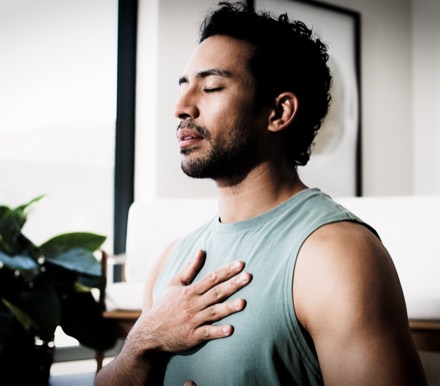
The first thing to know, before anything else, is that you are not dying and you are not losing your mind. It might genuinely feel like both. Your heart is slamming, your hands have gone tingly and strange, the room feels far away or too bright, and some part of your brain is very sure that something terrible is about to happen. That feeling is real. The danger it's warning you about is not.
A panic attack is your body doing exactly what it was built to do, just at the wrong moment. It's an old survival system firing when there's no bear, no cliff, no actual threat. Knowing that doesn't switch it off. But it can loosen its grip a little, and sometimes a little is enough to get you to the other side.
What's actually happening in there
When your brain senses danger (even danger it invented), it dumps adrenaline into your system to get you ready to run or fight. That's the whole show, right there. Your heart speeds up to move blood to your muscles. Your breathing goes fast and shallow. Blood pulls away from your fingers and your stomach, which is why you might feel tingly, cold, or nauseous. Your vision sharpens and narrows. You might feel dizzy or like you're floating slightly outside yourself.
Every one of those sensations is uncomfortable, and every one of them is harmless. Your body is flooded with a chemical designed to protect you. It cannot keep that up forever, because adrenaline burns off. This is the part worth holding onto when you're in it: a panic attack always ends. It peaks, usually within a few minutes, and then it comes down whether you do anything or not. You are not trapped in it. You're waiting it out.
Gentle ways to ride the wave
None of these are cures, and none of them are things you have to do perfectly. Think of them less as fixing the panic and more as giving your nervous system a signal that it's allowed to stand down. Try what feels reachable. Ignore the rest.
Slow the exhale. Not a big dramatic breath, just a longer breath out than in. Breathe in for a count of about four, out for about six. The long exhale is the part that tells your body the emergency is over. If counting feels like too much, just make your out-breath the slow part and let the in-breath take care of itself.
Come back into the room through your senses. Panic pulls you up into your racing head, so the move is to get back down into your body and your surroundings. Some people like this:
- Name five things you can see, right where you are, out loud or in your head.
- Press your feet flat into the floor and notice the actual pressure of the ground holding you up.
- Hold something cold or textured, a glass of water, a countertop, your own keys, and pay attention to how it really feels.
Let it be there without fighting it. This one sounds backwards, but bracing against panic often feeds it. You don't have to make it stop. You can let the wave rise, notice it, and remind yourself it's already on its way back down. You've felt this before and you came out fine. You will this time too.
When it's worth telling someone
A single panic attack in a stressful season is something a huge number of people go through, and it doesn't mean anything is wrong with you. But if they're becoming a regular visitor, if you're starting to avoid places or plans because you're scared one might hit, or if the dread is bleeding into your ordinary days, that's a sign this deserves more than white-knuckling. Panic responds really well to support. A doctor or a therapist can help you understand your particular version of it and give you tools that actually stick. Telling one trusted person, even just saying the words out loud to someone who loves you, can take a surprising amount of weight off.
You are also allowed to plan for the next one when you're calm, so future-you isn't starting from scratch at 2am. Some people keep a short note somewhere easy to reach, a few lines in their own voice that say this is panic, it will pass, breathe out slow. When we built Relief Mode, this is exactly the kind of moment we had in mind, a place to stash the thing that helps before you need it, so on the hard day you don't have to remember it. Because you won't be at your most resourceful mid-panic, and you shouldn't have to be.
For now, if you're in it or coming down from it, one more reminder: your body is not betraying you. It's trying, clumsily and too loudly, to keep you safe. You can thank it, and let it rest.