
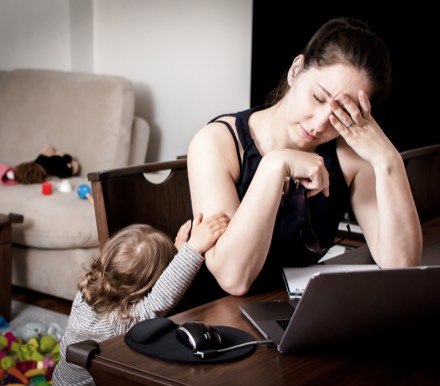
Let's start with the sentence you've probably said to yourself, maybe more than once. "I should be able to handle this."
I want to gently take that sentence apart, because it's doing you real harm. The exhaustion you're feeling from caring for another human being is not a sign that something is wrong with you. It's a sign that you've been carrying something heavy for a long time, often alone, usually without a break. That's not a character flaw. That's physics.
What burnout actually is
Burnout gets talked about like it's a mood, something you could shake off with a bubble bath and an early night. When you're the one caring for a person who needs you, it's more like a slow depletion of every reserve you have. Physical, emotional, mental, all of it drawing down at once, and rarely getting topped back up.
Think about what a day actually asks of you. The medication timed to the hour. The mood you have to read and manage before you've even had coffee. The appointments, the small emergencies, the constant low hum of watching, always watching, in case something changes. Nobody is built to run that system indefinitely with no relief. When the tank hits empty, that's not you failing. That's a load that outgrew one person, doing exactly what an oversized load does.
And here's the part that makes caregiving especially brutal. You can't clock out. There's no Friday. The person you love still needs you on the days you have nothing left, and that impossible math is where the guilt starts to grow.
The guilt tax
Almost every caregiver I've talked to pays a tax on rest. You sit down for twenty minutes and a voice starts up. You should be doing something. What if something happens while you're not paying attention. Other people manage this without complaining, so why can't you.
That voice is lying, and it's expensive. It means that even when you do get a break, you don't actually get the relief, because you're spending the whole time feeling bad about taking it.
You are allowed to need things while caring for someone who needs everything. Both can be true at once.
Taking care of yourself is not stealing from the person you love. A depleted caregiver has less to give, not more. The rest is part of the work, not a betrayal of it. If you can loosen the guilt even a little, the relief you already have access to gets a lot more real.
Small pockets, not grand escapes
When people say "take care of yourself," they often picture a spa weekend or a solo vacation, and you want to laugh, because when exactly. That version of self-care isn't available to most caregivers, and pretending it is just adds another thing you're failing at.
So forget the grand escape. Look for pockets instead. Ten minutes on the porch while they nap. A phone call to a friend where you get to be a person and not a role. One task handed off to someone else, even if you have to ask twice and it isn't done your way.
The handing off is the hardest part, I know. It feels easier to just do everything yourself than to explain, coordinate, and trust someone else with it. But that instinct is exactly what burns you down. If the details of a life, the medications and appointments and who to call, live only in your head, then you're the only one who can ever cover a shift. Getting all of it out of your head and into one shared place is quietly one of the kindest things you can do for yourself. It's part of why we built ThirdEyeOS, and why there's a Relief Mode for the days when even the app should ask less of you. So that on your emptiest day, someone else can step in and actually know what needs doing.
You didn't sign up for this expecting it to hollow you out. If it has, that's information about the size of the load, not the size of your heart. Please be as gentle with yourself as you are with the person you're caring for. You deserve at least that much. And if the weight ever feels like more than exhaustion, like something is going dark in you, that's worth telling a doctor or a person you trust. Carrying it alone was never the deal.